
Key Takeaways
- Properly designed storage silos with optimized hopper geometry reduce material degradation losses by 15-40% compared to poorly specified systems.
- Enclosed conveying and dust collection systems can capture 99.5%+ of airborne particulates, preventing product loss and environmental contamination.
- Variable frequency drives (VFDs) on conveyor motors and aeration systems reduce energy consumption by 25-35% during typical operating cycles.
- Corrosion-resistant silo linings extend structural lifespan from 15-20 years to 30-40+ years, reducing replacement material and embodied carbon.
- Automated inventory management through bin sensors and level monitoring reduces overfilling incidents by up to 90%, minimizing spillage and waste.
- Implementing closed-loop water systems in wet processing silos can reduce freshwater consumption by 60-80% in agricultural and mineral processing operations.
Why Sustainable Storage Engineering Matters More Than Ever
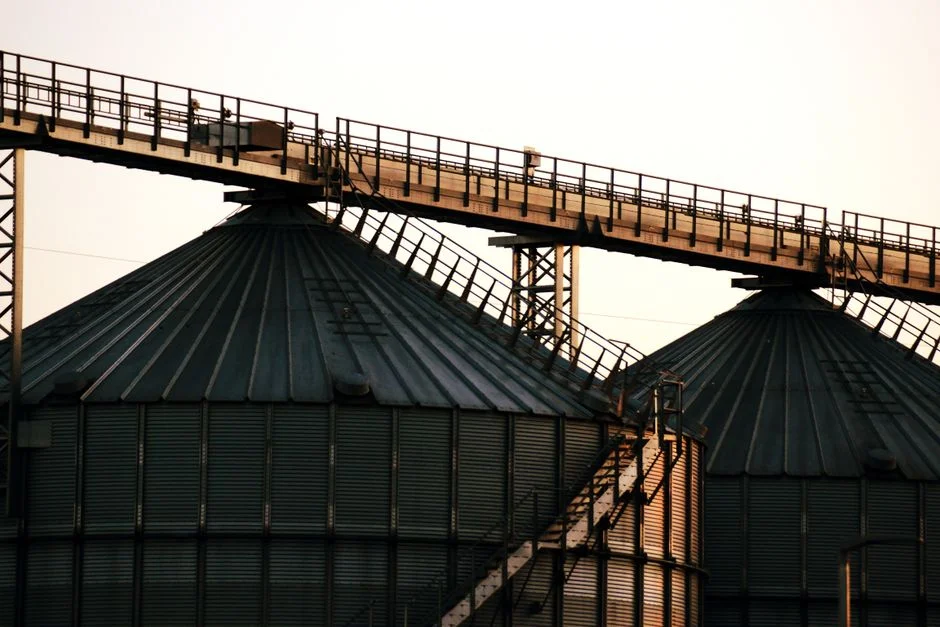
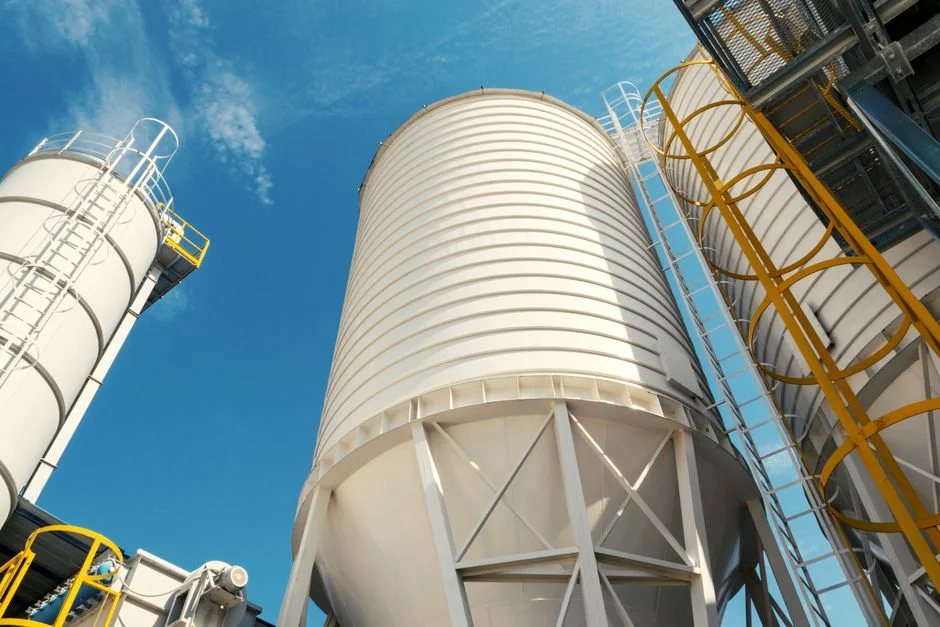
In my 15+ years designing silo systems across 30+ countries, I have witnessed a fundamental shift. A decade ago, sustainability was a nice-to-have checkbox. Today, it is an engineering imperative driven by three converging forces: tightening environmental regulations (EU Industrial Emissions Directive, US EPA 40 CFR 63, China's Blue Sky initiatives), rising material costs that make waste financially unacceptable, and genuine corporate environmental commitments backed by measurable ESG targets.
The bulk storage sector handles over 5 billion tons of materials globally each year—from grains and fertilizers to cement, fly ash, and minerals. Even a 2% improvement in material preservation across this volume translates to 100 million tons of saved product annually. That is the scale at which sustainable engineering decisions compound.
From our project experience, facilities that adopt integrated sustainable practices typically see three tangible benefits: operational cost reductions of 15-30% over a 10-year lifecycle, compliance readiness for current and anticipated environmental standards, and measurable reductions in their material supply chain carbon footprint.
How Silo Design Decisions Drive Sustainability Outcomes
Sustainability in bulk storage begins at the design phase. The choices made during engineering—hopper angle, outlet diameter, wall construction material, aeration configuration—determine environmental performance for the entire 30-50 year operational life of the structure.
Material Selection and Structural Longevity
Choosing the right silo material is the single most impactful sustainability decision. Here is a comparison from real project specifications we have engineered:
| Material | Typical Lifespan | Embodied Carbon | Maintenance Cost/Year | Best For |
|---|---|---|---|---|
| Galvanized Steel (G90) | 25-35 years | 1.46 kg CO₂/kg | $0.15-0.25/ton capacity | Agricultural, general bulk |
| Stainless Steel (304/316) | 35-50 years | 5.67 kg CO₂/kg | $0.05-0.12/ton capacity | Food, chemicals, corrosive |
| Reinforced Concrete | 40-60+ years | 0.12-0.18 kg CO₂/kg | $0.08-0.18/ton capacity | Large scale, high-capacity |
| Fiber-Reinforced Polymer | 25-40 years | 3.2-4.5 kg CO₂/kg | $0.03-0.08/ton capacity | Corrosive environments |
In a recent project for a fertilizer distributor in Southeast Asia, we specified 316L stainless steel silos instead of the client's original galvanized steel budget. The upfront cost increase was approximately 45%, but lifecycle analysis showed a 30% total cost reduction over 40 years due to eliminated relining cycles and reduced product contamination losses worth $180,000 annually.
Optimized Hopper Geometry for Material Preservation
Flow dynamics directly impact sustainability. Mass flow hoppers—designed per the Jenike shear cell methodology (ASTM D6773)—ensure first-in-first-out material movement, preventing ratholing, segregation, and product degradation. In our field experience, improperly designed hoppers cause 5-15% material degradation through compaction, moisture accumulation, and spoilage in stored bulk solids.
The key parameters: hopper half-angle (typically 15-25° for mass flow in steel silos), outlet diameter (minimum 6x material diameter for reliable discharge), and surface finish (Ra ≤ 3.2 μm for powders). Getting these right eliminates the need for energy-intensive flow aids like fluidization pads or vibrator systems.
What Role Does Dust Control Play in Sustainable Material Handling?
Dust is simultaneously a product loss, an environmental hazard, and a safety risk. In bulk material handling, fugitive dust emissions typically represent 0.5-2% of handled material by weight. For a facility handling 500,000 tons annually, that is 2,500-10,000 tons of lost product—worth $250,000 to $2 million depending on material value.
Our engineering approach to dust containment follows the hierarchy of controls:
- Elimination at source: Enclosed transfer points with sealed chutes and skirting (captures 85-95% of point-source dust)
- Engineering controls: Dust collection systems sized per ACGIH Industrial Ventilation Manual guidelines (typically 100-200 air changes/hour at transfer points)
- Process optimization: Reducing drop heights, controlling free-fall velocity, and matching material velocity at transfer points
- Monitoring: Continuous particulate monitoring per ISO 7708 classification standards
On a cement plant project in North Africa, we redesigned four transfer points with enclosed hood systems and a centralized baghouse filter (99.97% efficiency at 0.3 μm per EN 1822). The result: fugitive dust emissions dropped from 45 mg/m³ to below 5 mg/m³, cement recovery improved by 1.8%, and the facility met the most stringent EU emission standards without site boundary exceedance.
How Can Energy Efficiency Transform Silo Operations?
Bulk storage facilities consume significant energy through aeration systems, conveying equipment, dust collection fans, and climate control. Our energy audits across 100+ facilities reveal consistent opportunities for 25-40% reduction through targeted interventions:
Variable Frequency Drives and Smart Controls
Replacing fixed-speed motors with VFD-controlled systems is the highest-ROI sustainability investment for most operations. Typical results:
- Aeration blower systems: VFDs reduce energy consumption by 30-50% by matching airflow to actual demand rather than running at full capacity continuously
- Conveyor drives: Load-sensing VFDs cut energy use by 20-35%, with additional benefits of reduced mechanical wear and extended belt life
- Dust collection fans: Demand-controlled ventilation with differential pressure sensors reduces fan energy by 25-40%
Heat Recovery and Thermal Management
In applications involving temperature-controlled storage (grain drying, cement curing), waste heat recovery systems can capture 40-60% of thermal energy that would otherwise be lost. A grain terminal in Australia that we consulted on implemented exhaust air heat exchangers on their dryer silos, reducing natural gas consumption by 45% and saving approximately AUD $320,000 annually while maintaining precise moisture control.
What Water and Waste Strategies Deliver Measurable Results?
Beyond energy and material loss, sustainable bulk storage engineering addresses water consumption and end-of-life considerations:
Closed-Loop Water Systems
Facilities that use water for dust suppression, cleaning, or wet processing can implement closed-loop systems that treat and recirculate water. In our experience, properly designed settling ponds combined with filtration systems reduce freshwater intake by 60-80%. For a mineral processing facility handling 2 million tons annually, this translates to 150,000-250,000 cubic meters of water saved per year.
End-of-Life Material Recovery
Designing for disassembly is an overlooked sustainability principle. Steel silos achieve 90-95% recyclability at end of life. Concrete silos can be crushed for aggregate reuse at 70-80% recovery rates. Specifying modular construction techniques and avoiding composite materials where possible ensures maximum material recovery when silos are decommissioned after their 30-50 year service life.
Sustainability Metrics That Matter
Measuring sustainability performance requires tracking specific KPIs:
- Material Preservation Rate (MPR): Percentage of stored material recovered without degradation (target: >99.5%)
- Specific Energy Consumption: kWh per ton handled (benchmark: <1.5 kWh/ton for dry storage)
- Fugitive Dust Index: mg/m³ at facility boundary (target: <10 mg/m³)
- Water Recirculation Rate: Percentage of process water recirculated (target: >70%)
- Asset Lifespan Utilization: Percentage of design life achieved before major overhaul (target: >85%)
Frequently Asked Questions
How much does it cost to implement sustainable practices in an existing bulk storage facility?
Implementation costs vary significantly by facility scale and existing infrastructure. For a mid-size facility (50,000-200,000 ton capacity), typical sustainability upgrades including VFDs, dust collection improvements, and aeration optimization range from $150,000-$500,000. Most facilities achieve ROI within 2-4 years through energy savings, reduced material loss, and avoided regulatory penalties. The highest-impact, lowest-cost interventions—such as sealing transfer points and optimizing aeration schedules—often cost under $50,000 with payback in under 18 months.
What is the difference between mass flow and funnel flow in terms of sustainability?
Mass flow hoppers ensure all material moves simultaneously during discharge, providing first-in-first-out inventory management. Funnel flow creates a central flow channel with stagnant material at the periphery. From a sustainability perspective, mass flow reduces material degradation by 10-25%, eliminates moisture-induced spoilage in agricultural applications, and reduces the need for mechanical flow aids that consume energy. Funnel flow may be acceptable for non-degradable materials like aggregates, but for any moisture-sensitive or perishable bulk solid, mass flow design is the sustainable choice.
How do I measure the environmental impact of my silo operations?
Start by establishing baseline measurements for four key areas: energy consumption (kWh/ton), material loss rate (percentage of throughput), dust emissions (mg/m³ at property boundary), and water consumption (m³/ton processed). Use continuous monitoring systems—load cells for inventory accuracy, inline energy meters, opacity monitors for dust, and flow meters for water. Compare results against industry benchmarks published by organizations like the European Cement Association (Cembureau), Grain Elevator and Processing Society (GEAPS), or ASTM standards relevant to your industry. Annual sustainability audits should track year-over-year improvement against these metrics.
Can retrofitting dust collection systems really be cost-effective?
Absolutely—dust collection retrofits are among the highest-ROI sustainability investments. Captured dust is recovered product with direct monetary value. For example, at a cement terminal handling 1 million tons annually, even 0.5% dust recovery represents 5,000 tons of cement worth $400,000-$500,000. Modern baghouse and cartridge collector systems achieve 99.9%+ collection efficiency. Installation typically costs $100,000-$400,000 depending on scale, with payback periods of 12-24 months from product recovery alone—before factoring in avoided regulatory fines, reduced cleanup labor, and improved worker health outcomes.
What materials and construction methods have the lowest lifetime environmental footprint?
For most bulk storage applications, reinforced concrete silos offer the lowest lifetime environmental footprint due to their 40-60+ year lifespan, low maintenance requirements, and relatively low embodied carbon per unit of storage capacity (0.12-0.18 kg CO₂/kg versus 1.46 kg CO₂/kg for steel). However, steel silos are preferable when modularity, relocatability, or recyclability are priorities—steel achieves 90-95% end-of-life recycling rates. The optimal choice depends on application, local material availability, seismic requirements, and expected facility lifetime. A lifecycle assessment (LCA) per ISO 14040/14044 should guide this decision for any project exceeding $1 million in capital cost.
How long does it take to see ROI from sustainable bulk handling investments?
Based on our project portfolio spanning 30+ countries, the average payback period ranges from 18 months to 4 years depending on the intervention. Quick wins like VFD installation and transfer point sealing typically pay back in 12-24 months. Larger capital projects such as new dust collection systems or complete silo relining for extended lifespan achieve ROI in 2-4 years. The most significant long-term financial benefit often comes from extended asset life—properly maintained silos with sustainable design practices routinely operate for 35-50 years versus 20-25 years for minimally maintained systems, effectively halving the annualized capital cost of storage infrastructure.