
Key Takeaways
- Modern port bulk terminals handle 1,500–8,000 tonnes per hour (TPH) depending on material type, with top-performing grain terminals exceeding 10,000 TPH using dual ship unloader configurations.
- Silo storage capacity at a bulk terminal typically equals 7–15 days of vessel discharge rate, with individual silo diameters ranging from 8m to 30m and heights of 20m–55m for large marine installations.
- Proper bulk material flow analysis—accounting for angle of repose, wall friction, and cohesive strength—prevents arching and ratholing in silos, which can reduce terminal throughput by 40–60% during flow disruptions.
- Integrating ship unloader, conveyor, and silo operations through a central Terminal Management System (TMS) typically improves overall terminal efficiency by 18–25% compared to manual scheduling.
- Galvanized or Corten steel silos dominate port environments due to corrosion resistance, with wall thickness designed per API 650 or EN 14015 standards—typically 5–16mm for diameters up to 20m.
- Return on investment for throughput optimization upgrades at port terminals typically ranges from 2–4 years, with fuel and energy savings alone accounting for 30–50% of operational cost reductions.
Why Port Bulk Terminal Design Demands Integrated Systems Thinking
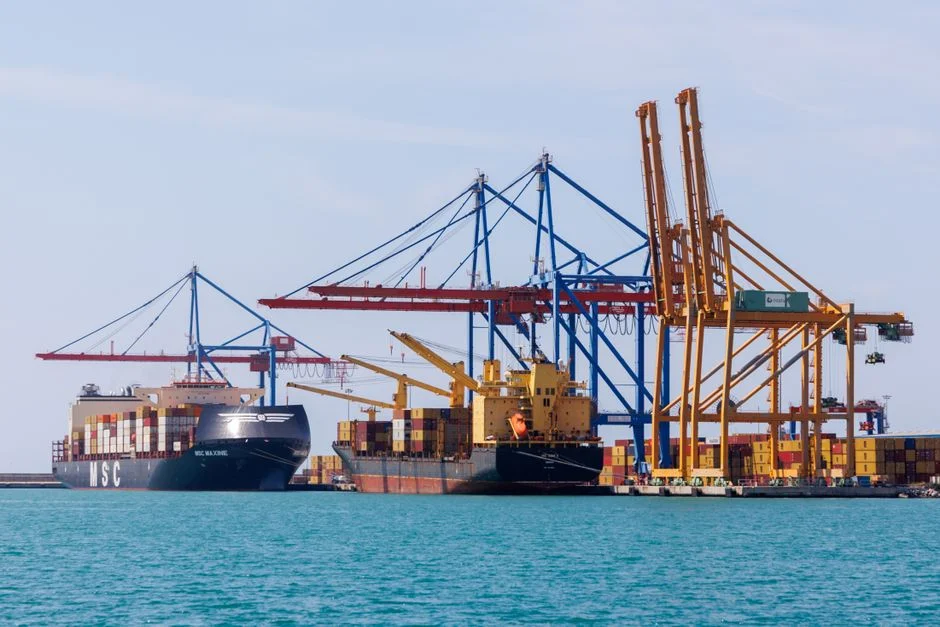
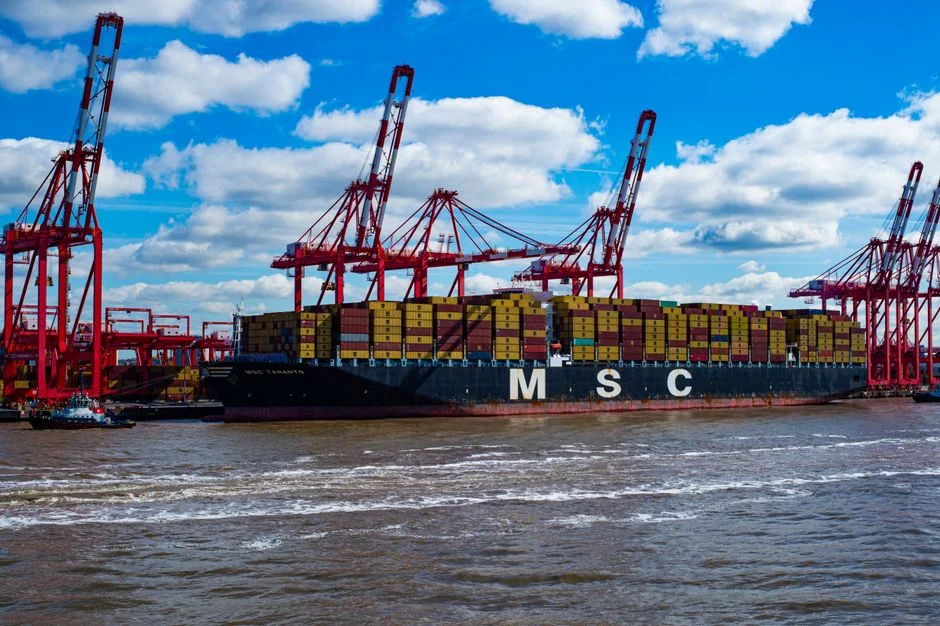
How Silo Configuration Directly Determines Terminal Throughput
The storage silo complex is the heart of any bulk terminal, and its configuration dictates the maximum sustainable throughput more than any other single element. Here is why. Choke Point Analysis: A terminal's throughput is governed by its slowest component—the classic bottleneck principle. In practice, the chain runs: Ship Unloader → Infeed Conveyor → Silo Fill System → Silo Storage → Silo Discharge → Outfeed Conveyor → Ship Loader or Rail/Truck Loadout. Each stage must be matched. A ship unloader rated at 3,000 TPH is wasted if the silo fill conveyors only handle 2,000 TPH. From our project experience, here is a comparison of common silo configurations at port terminals:| Configuration | Typical Capacity | Max Throughput | Best For | Footprint Efficiency |
|---|---|---|---|---|
| Row of 6–10 flat-bottom silos (10–15m dia.) | 30,000–80,000 tonnes | 1,500–3,000 TPH | Multi-product terminals | Moderate |
| Cluster of 4–8 large silos (20–30m dia.) | 50,000–200,000 tonnes | 3,000–8,000 TPH | Single-commodity high-volume | High |
| In-silo reclaim with concrete slipform | 100,000–500,000 tonnes | 4,000–10,000+ TPH | Bulk export terminals | Very High |
What Material Flow Testing Reveals Before Construction Begins
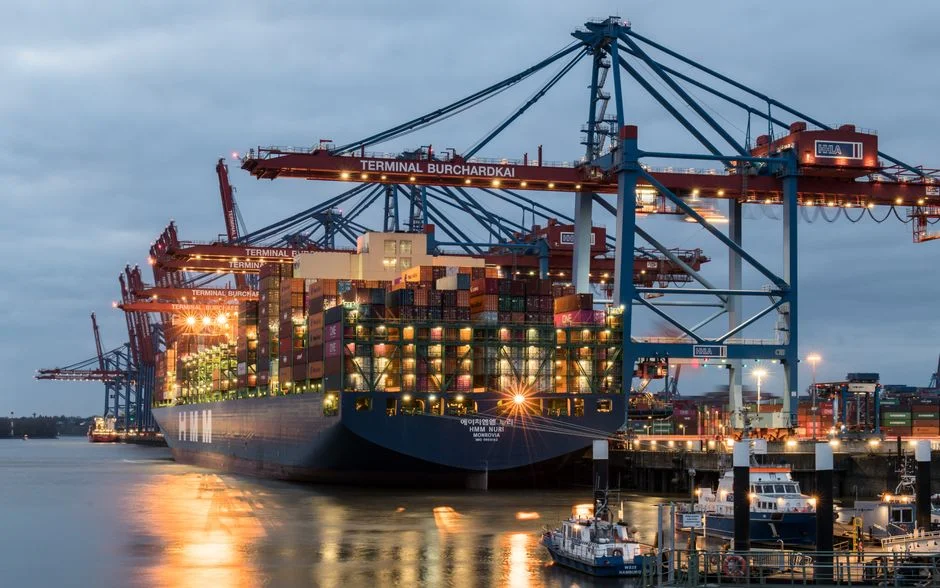
- Angle of Repose — Determines stockpile geometry and silo fill patterns. For wheat: 23–28°; for cement: 33–40°; for iron ore pellets: 28–35°.
- Wall Friction Angle — The friction between the bulk material and the silo wall material. Ranges from 8° (grain on stainless steel) to 35° (moist coal on mild steel).
- Effective Angle of Internal Friction — Critical for hopper half-angle calculations per the Jenike method.
- Compressibility — How much the material compresses under storage head pressure, affecting silo wall loads.
- Cohesive Strength (Unconfined Yield Strength) — The single most important predictor of flow stoppages due to arching.
Neglecting these tests is a false economy. A single flow stoppage at a terminal handling 3,000 TPH can cost $15,000–$50,000 per hour in delayed vessel demurrage, idle labor, and lost throughput opportunity. We have documented cases where $8,000–$12,000 invested in comprehensive flow testing during the design phase prevented $200,000+ in operational losses within the first two years of operation.
How Conveyor Network Design Maximizes Material Throughput Between Silos and Vessels
The conveyor system connecting ship unloaders to silos, and silos to outbound transport, represents 40–60% of a terminal's total capital cost for material handling. Getting it right is essential. Key design parameters we specify for port bulk terminal conveyors:- Belt Speed: 2.5–5.5 m/s for ship unloader feed lines; 3.0–6.0 m/s for long-distance overland conveyors. Higher speeds increase capacity but also accelerate belt wear and dust generation—requiring enclosed conveying systems per ISO 14321.
- Belt Width: Sized per CEMA (Conveyor Equipment Manufacturers Association) standards to deliver 80% troughing capacity at rated throughput. Common sizes: 800mm, 1000mm, 1200mm, 1400mm, and 1800mm for high-capacity terminals.
- Trough Angle: 35° is the standard for port terminals, offering the best balance between cross-sectional capacity and belt edge sealing.
- Enclosure: Modern port terminals increasingly require fully enclosed conveying per environmental regulations. Our projects in EU ports specify full enclosure with dust extraction to achieve < 50 mg/m³ emission levels.
At a coal terminal we designed in Indonesia, the original design called for a single 1400mm belt at 3.5 m/s rated for 2,800 TPH. During commissioning, we measured actual throughput at only 2,200 TPH—21% below design—because the transfer chutes between the ship unloader and the main conveyor were creating material segregation and buildup. By replacing the two standard chutes with an engineered hood-and-spoon transfer system (per CEMA Publication 385), we achieved the full 2,800 TPH design capacity without changing the belt or drive system. The transfer chute redesign cost approximately $45,000 but unlocked $1.2 million in additional annual throughput revenue.
What Standards and Codes Govern Port Bulk Terminal Silo Design
Port silo design must comply with multiple overlapping standards depending on material type, location, and client requirements. In our projects, the most commonly referenced codes include:| Standard | Scope | Application |
|---|---|---|
| API 650 (Welded Tanks) | Design, fabrication, and testing of welded steel tanks | Widely used for large-diameter steel silos at port terminals in Asia-Pacific and Middle East |
| EN 14015 / Eurocode 3 Part 4 | Design of silos and tanks for bulk solids storage | Standard for European and African port terminal projects |
| ACI 376 (Concrete Silos) | Design of reinforced concrete silos for bulk materials | Concrete slipform silos at large export terminals |
| AS 3774 (Australia) | Loads on silos | Specific to Australian port bulk terminals |
| GB 50077 (China) | Code for design of reinforced concrete silos | Chinese port bulk terminal projects |
The interaction between the bulk material and the silo structure is uniquely complex because silos experience both structural loads (wind, seismic, self-weight) and stored-product loads (pressure, friction, dynamic effects during discharge). The ANSI/ASAE EP433 standard provides specific guidance on designing for eccentric discharge, which is a common cause of silo failure in port settings where multiple conveyors may extract from the same silo simultaneously.
In our experience, specifying the wrong standards for a project location leads to either dangerous under-design or wasteful over-design. For example, API 650 uses a working stress design approach, while EN 14015 uses limit state design—the same silo designed under both codes can differ in wall thickness by 15–25%.
Frequently Asked Questions
Q: How much does it cost to build a bulk terminal silo complex at a port?
A: Capital cost for a port bulk terminal silo complex varies widely based on capacity, material, and location, but typical ranges are $80–$150 per tonne of storage capacity for steel silos and $100–$200 per tonne for reinforced concrete silos. A 50,000-tonne steel silo complex at a Southeast Asian port typically costs $5–$8 million, while a 200,000-tonne concrete slipform facility may cost $20–$35 million. These figures include foundations, structural steelwork, fill and reclaim systems, but exclude land costs and waterside equipment.
Q: What is the typical throughput rate of a modern port bulk terminal?
A: Modern port bulk terminals typically achieve 1,500–8,000 tonnes per hour (TPH) depending on the commodity and equipment. Grain export terminals commonly operate at 2,000–4,000 TPH using continuous ship loaders, while coal and iron ore terminals can reach 6,000–10,000+ TPH with large continuous unloaders and high-capacity conveyor systems. The theoretical throughput is always limited by the slowest component in the material flow chain, which is why integrated systems design is critical.
Q: How long does it take to design and construct a bulk storage terminal?
A: From feasibility study to commissioning, a major port bulk terminal project typically requires 18–36 months. Detailed engineering design takes 6–12 months, procurement of major equipment (silos, conveyors, ship loaders/unloaders) requires 8–14 months, and construction and commissioning take 12–18 months. Phased construction can allow partial operations to begin 12–18 months before full completion. Our experience shows that early investment in thorough material flow testing and front-end engineering design (FEED) can reduce overall project timelines by 3–6 months by avoiding rework.
Q: What is the difference between mass flow and funnel flow in terminal silos?
A: Mass flow occurs when all the material in a silo moves simultaneously during discharge, providing first-in-first-out inventory control and consistent discharge rates—essential for terminal throughput. Funnel flow occurs when material flows only through a central channel, leaving stagnant zones along the walls, causing segregation, inconsistent composition, and potential structural issues from eccentric loads. Mass flow is achieved by designing steep hopper walls (typically 55°–75° from horizontal) with low-friction liners. In port terminals, mass flow is strongly preferred because it ensures predictable, controllable discharge rates that match conveyor system design capacity.
Q: How do environmental regulations affect port bulk terminal design?
A: Environmental regulations significantly impact modern port terminal design, typically adding 10–20% to capital costs compared to unregulated designs. Key requirements include fully enclosed conveyors and transfer points (per ISO 14321 or local equivalents), dust extraction systems at all loading and discharge points (targeting < 50 mg/m³ particulate emissions), stormwater containment for stockpiles, and noise barriers limiting community exposure to < 55 dB(A) at the terminal boundary. In the EU, the Industrial Emissions Directive (IED) requires Best Available Techniques (BAT) compliance, while in Singapore, the Maritime and Port Authority sets strict emission controls for all port operations.
Q: How do you prevent material flow problems like arching and ratholing in port silos?
A: Preventing flow problems begins with Jenike-method bulk material flow testing (ASTM D6773) during the design phase to characterize each commodity's cohesive strength, wall friction, and compressibility. Hopper geometry is then designed to ensure mass flow: half-angles are calculated using the Jenike flow-no-flow criterion, typically resulting in 55°–70° hopper slopes for cohesive materials. Wall liners (stainless steel, UHMWPE, or ceramic tiles) reduce wall friction to maintain the mass flow condition. For materials with very high cohesive strength (FFc < 2), active flow assistance devices such as air cannons, vibrators, or mechanical bin activators may be required. The investment in proper flow design is minimal compared to the operational cost of flow stoppages, which can exceed $25,000 per hour at a busy port terminal.