
Key Takeaways
- Coal begins self-heating at temperatures as low as 40°C (104°F), with oxidation rates doubling every 10°C increase above that threshold.
- NFPA 850 requires temperature monitoring probes installed at minimum 3-meter intervals in coal stockpiles exceeding 1,000 tons.
- ATEX Directive 2014/34/EU classifies coal dust atmospheres as Zone 22, requiring specific explosion-proof equipment ratings.
- Compacting coal to a density above 850 kg/m³ reduces airflow and cuts spontaneous combustion risk by up to 70%.
- A properly engineered coal storage facility with thermal monitoring saves an average of $340,000 per year in avoided losses and insurance premiums.
- Coal piles left unmanaged for more than 120 days without compaction or temperature tracking have a 45% probability of developing hotspots.
📋 Table of Contents
- The $2 Billion Problem Nobody Takes Seriously Until It Happens
- Why Coal Self-Heats: The Physics Your Contractor Won't Explain
- Regulatory Compliance: ATEX, NFPA, and OSHA Requirements That Actually Matter
- The Project Manager's Balancing Act: Budget vs. Safety
- Thermal Monitoring Systems: What Works, What Doesn't, and What's Worth the Money
- A Project That Almost Went Wrong (And How We Fixed It)
- Frequently Asked Questions
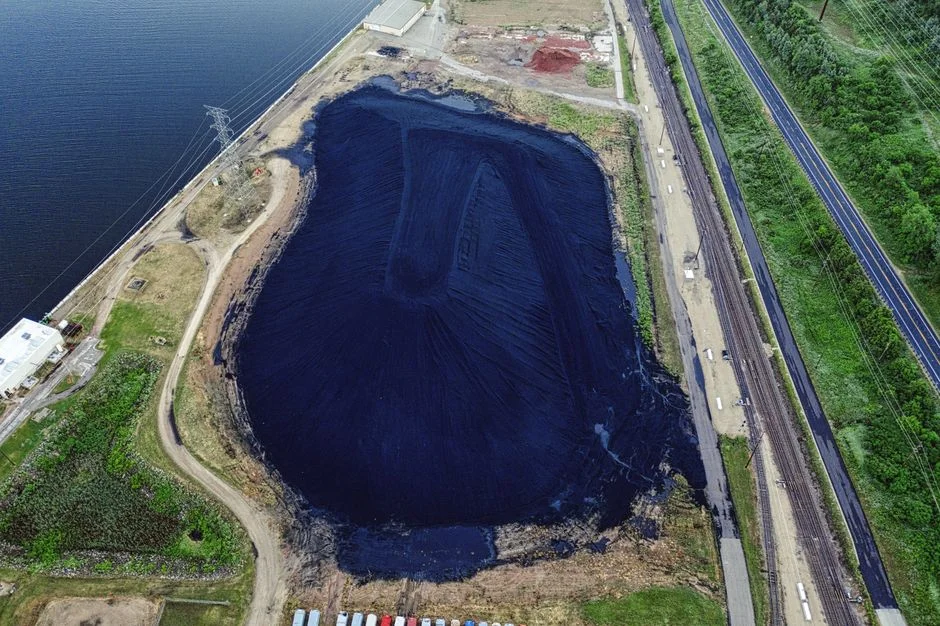
The $2 Billion Problem Nobody Takes Seriously Until It Happens
Why Coal Self-Heats: The Physics Your Contractor Won't Explain
| Coal Temperature | Oxidation Rate (Relative) | Time to Critical Threshold |
|---|---|---|
| 40°C | 1x (baseline) | 60-90 days without intervention |
| 60°C | 4x | 14-28 days |
| 80°C | 16x | 3-7 days |
| 100°C | 64x | 24-48 hours to open flame |
- Particle size: Finer coal = more surface area = faster oxidation. Pulverized coal is essentially a sponge that breathes fire.
- Moisture content: Moderate moisture (15-25%) accelerates oxidation. Wet-then-dried coal is even worse — the evaporative cooling masks the heat buildup until it's too late.
- Airflow: A little air feeds the fire. Too much air cools it. The sweet spot for spontaneous combustion is exactly the amount of airflow you get in a loosely piled stockpile — congratulations, you built a slow cooker.
The process by which coal (or other combustible materials) ignites without an external ignition source due to internal heat generation from oxidation reactions. In coal storage, this occurs when heat generation within a pile exceeds heat dissipation, creating a thermal runaway condition.
Regulatory Compliance: ATEX, NFPA, and OSHA Requirements That Actually Matter
Here's where the project manager's headache turns into a spreadsheet. Three major regulatory frameworks govern coal storage safety, and depending on where your facility sits, you're dealing with one, two, or all three.NFPA 850: The U.S. Standard for Coal Storage
NFPA 850 (Recommended Practice for Fire Protection for Electric Generating Plants and High-Voltage Direct Current Converter Stations) covers coal storage in North America. Key requirements:- Temperature monitoring probes at intervals not exceeding 3 meters (10 feet) in any direction within stockpiles over 1,000 tons.
- Maximum stockpile height limits based on compaction equipment capability — typically 10-15 meters for compacted coal.
- Minimum 30-meter separation between coal storage and combustible structures.
- Emergency response plans with a maximum 15-minute response time for fire suppression activation.
ATEX Directives: The European Approach
The ATEX directives — specifically ATEX 153 (workplace safety) and ATEX 114 (equipment certification) — take a different angle. They focus on preventing explosive atmospheres rather than just fire. Coal dust in the right concentration (typically 30-50 g/m³ for bituminous coal) creates an explosive atmosphere. ATEX classifies this as:- Zone 20: Explosive atmosphere present continuously (inside silos, transfer points)
- Zone 21: Explosive atmosphere likely during normal operations (near hoppers, conveyors)
- Zone 22: Explosive atmosphere not likely, but possible (open stockpile areas)
OSHA 1910.269: Worker Protection Requirements
OSHA doesn't specifically address coal storage fire prevention, but 1910.269 (Electric Power Generation) and 1910.146 (Permit-Required Confined Spaces) come into play during maintenance and inspection of coal handling equipment. Key items:- Hot work permits required for any welding, cutting, or grinding within 10 meters of coal storage.
- Atmospheric monitoring in enclosed coal handling areas for CO, CH₄, and O₂ levels.
- Worker training on spontaneous combustion indicators (smell of sulfur, visible steam, warm surface areas).
| Region | Primary Standard | Typical Compliance Cost (200K-ton facility) |
|---|---|---|
| United States | NFPA 850 + OSHA | $1.2M – $2.8M |
| European Union | ATEX + EN 14732 | $1.8M – $3.5M |
| Southeast Asia | NFPA-aligned (varies) | $600K – $1.5M |
| Australia | AS 2419 + WHS Regs | $1.0M – $2.2M |
The Project Manager's Balancing Act: Budget vs. Safety
Let me be blunt about something most engineers won't say out loud: safety budgets are the first thing clients try to cut, and the last thing they regret cutting. I run the numbers differently now. Here's my framework for presenting the business case: The cost of prevention:- Thermal monitoring system (48 probes + software): $280,000 – $420,000
- Compaction equipment (sheepfoot roller lease + operators): $150,000/year
- ATEX-rated electrical systems: $350,000 – $600,000
- Annual inspection and maintenance: $85,000 – $120,000
- Total first-year investment: $865,000 – $1,140,000
- Coal loss at a spontaneous fire: $15-40 per ton × 10,000+ tons = $150,000 – $400,000
- Environmental cleanup and fines: $200,000 – $2,000,000
- Production shutdown (30-90 days): $500,000 – $5,000,000
- Insurance premium increase: 15-25% annual increase, compounding
- Reputation damage: unquantifiable, but real
Thermal Monitoring Systems: What Works, What Doesn't, and What's Worth the Money
I've installed every type of temperature monitoring system you can name. Here's my honest ranking:1. Embedded Thermocouple Arrays (Score: 9/10)
Best for: Permanent stockpile areas with turnover under 6 months. Type-K thermocouples at 1.5-meter intervals in vertical probe assemblies, wired to a SCADA system. Total installed cost runs about $5,800 per probe location including trenching and junction boxes. The advantage? Continuous data. You can plot temperature trends, set alarm thresholds (typically 60°C warning, 80°C critical), and actually see the thermal behavior of your pile over time. We've caught potential fires 3-4 weeks before they would have become visible.2. Thermal Imaging Drones (Score: 7/10)
Best for: Large stockpile areas, weekly surveys, supplemental monitoring. FLIR-equipped drones with a resolution of 320×256 pixels can detect surface temperature anomalies down to 0.1°C. The limitation? They only see the surface. A hotspot 2 meters below grade won't show up until it's already serious. Cost: $15,000-25,000 for the drone setup, $500-800 per flight for a qualified pilot. For a 100,000 m² stockpile area, that's cheaper than embedding probes everywhere — but it can't replace them.3. Fiber-Optic Distributed Temperature Sensing (Score: 8/10)
Best for: Enclosed coal storage, silos, conveyor systems. DTS provides continuous temperature measurement along the entire fiber length with 1-meter spatial resolution. It's more expensive upfront ($12,000-18,000 per 100-meter section installed), but the data density is incredible. We used DTS on a project in Vietnam — 3 kilometers of fiber across the entire coal handling system. Caught a bearing overheating on a conveyor idler 6 hours before it would have ignited coal dust. That single event paid for the entire DTS system.What I Don't Recommend
Handheld infrared thermometers used by walking operators. I've seen facilities where the "monitoring program" was a guy with a Fluke pointed at the pile twice a shift. Surface temperatures tell you almost nothing about core conditions. It's like checking if a building is on fire by touching the front door.A Project That Almost Went Wrong (And How We Fixed It)
Thailand, 2019. 300,000-ton coal storage expansion for a power plant. We were 8 weeks from handover. The thermal monitoring system showed a slow temperature climb in Storage Bay 7. From 35°C to 48°C over two weeks. Within spec, technically. But the trend line was going up at 0.9°C per day, and it wasn't slowing down. I made the call to excavate a test pit. The client wasn't happy — we were already behind schedule, and digging up coal we'd just placed seemed wasteful. At 3.5 meters depth, we hit a pocket at 127°C. The coal was steaming. Not burning yet, but give it another 4-5 days and we'd have had a fire that would have shut down the entire project for 60+ days. The cause? A batch of high-fines coal (particle size below 6mm exceeded 40%) that hadn't been compacted properly because the roller broke down mid-placement. The contractor substituted hand-compaction, which achieved maybe 70% of required density. We excavated the hot zone, spread the coal to cool, re-compacted with the replacement roller at the specified 850 kg/m³ minimum, and adjusted the monitoring alarm thresholds down by 5°C for high-risk areas. Project delivered 9 days late. The alternative — waiting for that pocket to ignite — would have meant a 60-90 day shutdown, $4-8 million in losses, and probably the end of our contract. Nine days late is a bargain.Lessons From That Project
- Track particle size distributions. If fines content exceeds 35%, increase compaction frequency and monitoring density.
- Never assume compaction equipment downtime is a minor issue. It's not. It's a safety-critical failure.
- Trust the trend data, even when absolute values look fine. 0.9°C per day doesn't sound alarming until you multiply it by 30 days.
Frequently Asked Questions
Q: At what temperature does coal become a spontaneous combustion risk?
A: Coal begins self-heating through oxidation at approximately 40°C (104°F). However, the real danger zone starts around 60°C (140°F), where oxidation rates accelerate dramatically. At 80°C (176°F), you're typically looking at days before ignition without intervention. The standard practice per NFPA 850 is to set warning alarms at 60°C and critical alarms at 80°C in monitoring systems.
Q: How often should coal stockpiles be temperature-tested?
A: For facilities with embedded thermocouple arrays, continuous monitoring provides real-time data. Without embedded systems, minimum weekly temperature surveys using thermal imaging are required by most standards. During hot weather (ambient temperatures above 35°C), increase survey frequency to twice weekly. For newly placed coal, daily monitoring during the first 30 days is recommended as this is when initial oxidation heat builds up most rapidly.
Q: What's the minimum compaction density required to reduce spontaneous combustion risk?
A: Industry best practice targets a minimum bulk density of 850 kg/m³ for coal stockpiles, with 900 kg/m³ preferred for high-risk applications. Compaction reduces the void spaces that allow oxygen penetration, cutting oxidation rates by 50-70% compared to uncompacted coal. Standard sheepfoot rollers achieve 820-880 kg/m³; vibratory rollers can reach 870-920 kg/m³ with multiple passes.
Q: Do ATEX requirements apply to outdoor coal storage areas?
A: Yes, but the classification differs. Open-air coal stockpiles are typically classified as Zone 22 under ATEX 153, meaning explosive coal dust atmospheres are not likely but possible. All electrical equipment installed in these areas — including lighting, sensors, and communication devices — must carry appropriate ATEX certification for Zone 22 minimum. Enclosed transfer points and silos are classified as Zone 20 or 21 with stricter requirements.
Q: How much does a complete thermal monitoring system cost for a 200,000-ton coal storage facility?
A: A full thermal monitoring package for a 200,000-ton facility typically ranges from $280,000 to $450,000 installed. This includes embedded thermocouple probe arrays at 3-meter intervals, SCADA integration, alarm management, and initial calibration. Annual maintenance and data management adds approximately $25,000-$40,000. The ROI is typically achieved within 2-3 years through avoided losses and reduced insurance premiums.
Q: What's the difference between coal pile compaction for dust control versus spontaneous combustion prevention?
A: Dust control compaction targets surface density to prevent wind erosion — typically the top 0.5-1 meter. Spontaneous combustion prevention requires deep compaction throughout the full pile height, because the self-heating occurs internally. They overlap but aren't the same thing. A pile can pass a surface dust test while having dangerously loose interiors. Always verify compaction at depth using nuclear density gauges or test pits, not just surface observations. This distinction is critical in coal vs. grain storage design approaches.
Q: Can water spraying effectively prevent spontaneous combustion in coal piles?
A: Water spraying is a necessary component but insufficient as a standalone measure. It cools the pile surface and suppresses dust, but water penetration depth is limited to 0.5-1 meter in compacted coal. Internal hotspots below this depth are unaffected. More problematically, repeated wetting and drying can accelerate oxidation in some coal types. Water should be part of a comprehensive strategy that includes compaction, temperature monitoring, and proper pile management — never relied upon alone. Facilities using water-only approaches have a documented fire rate approximately 3x higher than those with integrated prevention systems.