
Key Takeaways
- A silo designed only for dead load and stored material pressure misses 40-60% of the actual structural demand in seismic or high-wind zones.
- Thermal gradient stresses in desert climates can generate hoop stress equivalent to 15-20% of internal pressure loads — often unaccounted for in basic designs.
- Load combination factors per ASCE 7-22 (Section 2.3) require multiplying dead, live, wind, and seismic loads with specific coefficients that change depending on which scenario governs.
- In seismic Zone 3 and above, the base shear on a tall, slender silo can exceed 8-12% of total weight, demanding serious foundation anchorage.
- Wind-induced vortex shedding on cylindrical silos between 15-30 meters tall creates oscillating lateral forces that pure static wind analysis misses entirely.
- Steel silos in freeze-thaw climates need expansion joints every 12-15 meters of shell height or you'll get bolt fatigue failures within 3-5 winter cycles.
📋 Table of Contents
- The Night the Wind Almost Took Down a Silo in the Philippines
- Why Static Wind Analysis Isn't Enough for Tall Silos
- Seismic Load Calculations: Where the Math Gets Real
- Thermal Expansion and Contraction: The Hidden Hoop Stress
- Load Combination Analysis: How ASCE 7 Governs Silo Design
- Frequently Asked Questions
The Night the Wind Almost Took Down a Silo in the Philippines
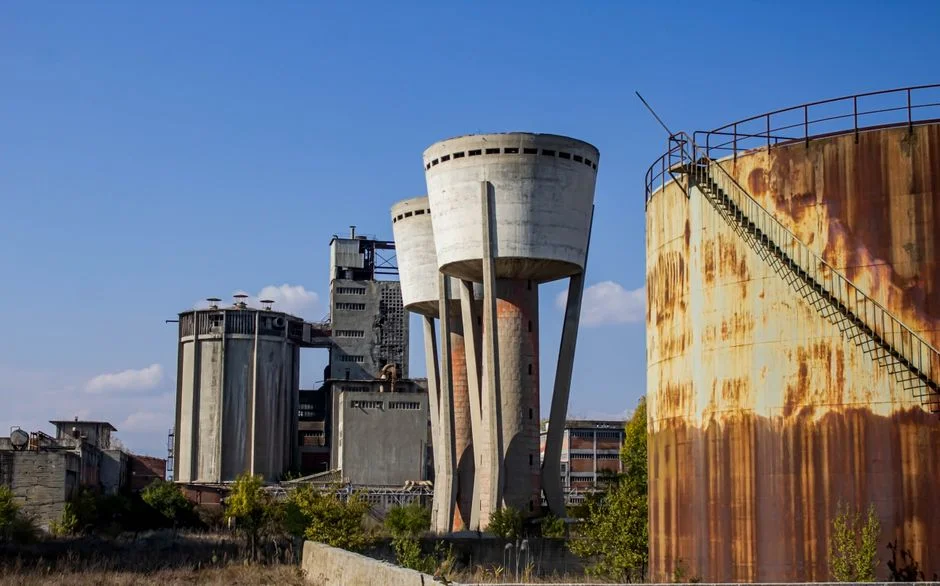
Typhoon Kammuri hit three weeks after we finished erection. Peak gusts recorded at the site: 165 km/h. The silos survived. Barely. Two of the four developed visible buckling in the upper shell courses — not enough to fail, but enough that we had to reinforce them before the client would accept the project. The failure mode wasn't what anyone expected. It wasn't direct wind pressure on the windward face. It was vortex shedding on the leeward side, creating alternating low-pressure zones that pulled the thin shell inward. The 3mm plates on course 5 and 6 had a buckling resistance of roughly 4.2 kN/m² under external pressure. The actual dynamic pressure differential hit 5.8 kN/m². That's when I learned that climate considerations in silo design aren't just check-box items. They're the difference between a structure that stands for 30 years and one that needs emergency bracing before you've even handed over the keys.
Why Static Wind Analysis Isn't Enough for Tall Silos
- Direct pressure — the obvious one. Windward face gets pushed. Leeward face gets suction. This is what most codes calculate first.
- Vortex shedding — when wind flows around a cylindrical structure, it creates alternating vortices downstream. For silos between 15-35 meters tall with diameters of 5-12 meters, the Strouhal number (typically 0.2 for cylinders) puts the shedding frequency right in the range that can excite natural structural frequencies.
- Lift forces — the curved surface creates asymmetric pressure distribution that can generate significant lateral and even uplift forces.
See the problem? The net external suction exceeded the shell's buckling capacity by 12%. That's how you get dents. The fix was straightforward — we increased the upper three courses to 4mm and added internal stiffener rings at 1.5-meter spacing. Cost? About $2,800 per silo. Cheap insurance compared to a catastrophic failure. As discussed in our guide to steel silo shell plate design, the thickness-to-diameter ratio is everything when external loads enter the picture.Dynamic pressure q = 0.6 × V² = 0.6 × 70² = 2,940 Pa = 2.94 kN/m²
With external pressure coefficient Cp = -1.4 (leeward/suction) and internal coefficient Cpi = +0.2:
Net external pressure = 2.94 × (1.4 + 0.2) = 4.70 kN/m²
Buckling resistance of 3mm steel shell (r = 4000mm, E = 200 GPa): ~4.2 kN/m²
Seismic Load Calculations: Where the Math Gets Real
- SDS (short-period design spectral acceleration): 1.0g
- SD1 (1-second spectral acceleration): 0.6g
- R (response modification factor for silos): 3.0 (per ASCE 7 Table 12.2-1, "Bins and hoppers")
- Effective weight W: approximately 450 tonnes (structure + stored grain at 80% fill)
Base shear: V = 0.417 × 4500 kN = 1,877 kN That's nearly 1,900 kN of lateral force at the foundation level. For a structure weighing 4,500 kN total. Think about that — the earthquake is trying to push the silo sideways with a force equal to 42% of its total weight. Now here's where it gets interesting for silos specifically. Unlike a building, the mass distribution isn't uniform. The stored grain creates a hydrostatic-like pressure profile that's highest near the bottom but contributes significantly to the dynamic mass at mid-height. The impulsive mass (material that moves with the wall) might be 60-70% of total fill weight. The convective mass (sloshing grain near the top surface) adds another dynamic component. Most engineers oversimplify this by treating the grain as rigid mass attached to the structure. That works for preliminary sizing. For final design in high-seismic zones, you really should use the impulsive-convective model from ASCE 7 Chapter 15. Foundation design gets brutal in these cases. The overturning moment on our 25-meter silo was approximately 28,000 kN·m. With a 10-meter diameter base, that translates to a maximum bearing pressure variation of ±360 kN/m². If your foundation bearing capacity is 200 kN/m² (typical for stiff clay), you need a mat foundation or deep piling — no getting around it.Cs = SDS / (R / Ie) = 1.0 / (3.0 / 1.25) = 0.417
But capped at Cs_max = SD1 / [T × (R / Ie)]
For this silo, fundamental period T ≈ 0.4 seconds (short, stiff structure)
Cs_max = 0.6 / [0.4 × 2.4] = 0.625
Governing Cs = 0.417 (since 0.417 < 0.625)
Thermal Expansion and Contraction: The Hidden Hoop Stress
Everybody forgets about thermal loads. I've reviewed designs from engineers who nailed wind, nailed seismic, and completely ignored the fact that their silo sits in a desert where surface temperatures swing 50°C between night and day. Here's the physics. Steel has a thermal expansion coefficient of 12 × 10⁻⁶ /°C. For a silo with a 10-meter diameter:120 MPa. On a silo that's also carrying internal pressure, dead load, and possibly wind or seismic loads. That's not trivial — it's roughly 40-50% of the yield strength of S235 steel. In hot climates, I've seen the opposite problem too. A silo filled with hot grain (say, freshly dried at 60°C) in an ambient environment of 5°C creates a massive temperature gradient through the shell wall. The inner surface expands, the outer surface stays cool. This generates compressive stress on the outside of the shell — a perfect setup for elastic buckling. The material selection process needs to account for this. High-temperature environments might push you toward aluminum for certain applications, or require stress-relief considerations in welds. Cold-climate silos have their own headaches. Concrete silos in Scandinavian or Canadian installations deal with freeze-thaw cycling that degrades the shell surface. Steel silos in those same climates experience contraction stresses that accumulate over thousands of thermal cycles. Expansion joints — yes, on a silo — become necessary above certain height thresholds.Diameter change per °C: ΔD = α × D × ΔT = 12×10⁻⁶ × 10,000 × 1 = 0.12 mm/°C
For a 50°C daily swing: ΔD = 0.12 × 50 = 6.0 mm
Resulting hoop strain: ε = ΔD / D = 6.0 / 10,000 = 600 × 10⁻⁶
Hoop stress: σ = E × ε = 200,000 × 600×10⁻⁶ = 120 MPa
Load Combination Analysis: Where Climate Forces Collide
Here's the part most people get wrong. They design for wind. They design for seismic. They design for thermal. Then they forget that nature doesn't ask permission to combine them. ASCE 7-22 Section 2.3 gives us the load combinations. The relevant ones for silos with climate loads:- LC1: 1.4D
- LC2: 1.2D + 1.6L + 0.5(Lr or S or R)
- LC3: 1.2D + 1.6(Lr or S or R) + (1.0L or 0.5W)
- LC4: 1.2D + 1.0W + 1.0L + 0.5(Lr or S or R)
- LC5: 0.9D + 1.0W
- LC7: 0.9D + 1.0E
| Load Combination | Governing Scenario | Max Shell Stress | Foundation Demand |
|---|---|---|---|
| LC2 (Dead + Live + Pressure) | Full grain load | 148 MPa | 3,200 kN (vertical) |
| LC4 (Dead + Wind + Live) | 70 m/s wind, full load | 186 MPa | 3,450 kN vert + 1,100 kN horiz |
| LC7 (0.9D + Seismic) | MCE-level earthquake | 212 MPa | 2,800 kN vert + 1,880 kN horiz |
Frequently Asked Questions
What wind speed should I design a silo for?
It depends on your location and applicable code. In the United States, ASCE 7-22 provides risk-based wind speeds from 115-195 mph (ultimate) depending on the building's risk category and location. A grain silo (Risk Category II) in coastal Texas might need 140 mph ultimate wind speed, while the same silo in inland Kansas might only need 115 mph. Always check the local wind speed map and multiply by the appropriate exposure and gust factors. For tropical regions, reference local meteorological data — typhoon or cyclone wind speeds can exceed 170 km/h.
How do I calculate seismic loads for a silo filled with grain?
Per ASCE 7 Chapter 15, treat the stored material using the impulsive-convective model. The impulsive component (roughly 60-80% of the fill mass) moves rigidly with the silo walls. The convective component (the remaining 20-40%) sloshes and has a longer natural period. Calculate the base shear as V = Cs × W, where Cs comes from the building period and site class, and W is the total effective seismic weight (structure plus grain). For most practical silos, the fundamental period is under 0.5 seconds, placing them in the short-period range where seismic coefficients are highest.
Can thermal stress really damage a steel silo?
Absolutely. In climates with 40-50°C daily temperature swings, thermal hoop stress alone can reach 80-120 MPa — which is 35-50% of the yield strength of common structural steel grades. When combined with internal pressure from stored material and external wind or seismic loads, thermal stress can push the total stress state past the design limit. This is especially dangerous for thin-shell silos (3-4mm plates) in the upper courses where external pressure from wind is also highest.
What is the difference between ultimate and service wind speed in silo design?
Ultimate wind speed (used in LRFD design per ASCE 7-16 and later) includes all load factors within the speed itself. Service wind speed (used in older ASD methods) is lower and requires separate load factors. For example, a location with 120 mph service wind speed might have 140 mph ultimate. The structural demand on the silo is the same either way — the difference is just in how the safety factors are applied in the calculation.
How does silo height affect wind load design?
Significantly. The velocity pressure exposure coefficient (Kz) increases with height — at 15 meters in open terrain it's roughly 0.85, but at 25 meters it's approximately 1.07. That's a 26% increase in wind pressure. Additionally, taller silos have lower natural frequencies, making them more susceptible to dynamic effects like vortex shedding. A 30-meter silo in a 60 km/h steady wind may experience oscillating lateral forces that a static analysis completely misses. For silos above 20 meters, dynamic wind analysis is strongly recommended.
Do concrete silos handle seismic loads better than steel silos?
It depends on the seismic zone. Concrete silos have higher mass (which increases seismic demand) but also greater inherent damping and better energy dissipation. In moderate seismic zones (SDS < 0.5g), concrete silos can be more economical because the thicker walls resist buckling without additional stiffening. In high-seismic zones (SDS > 0.8g), steel silos can actually perform better because their lower mass reduces the base shear, and modern seismic detailing (proper anchorage, ductile connections) gives them the toughness they need. The answer is always "it depends" — but run the numbers for your specific site.
When should I add expansion joints to a silo?
For steel silos in climates where the temperature range exceeds 40°C seasonally, expansion joints or slip connections should be considered for silos taller than 15 meters. The total axial expansion for a 25-meter steel silo over a 50°C range is approximately 15mm — enough to induce significant stress at fixed connections if not accommodated. Concrete silos have lower thermal expansion coefficients but are more susceptible to thermal cracking, which requires reinforcement detailing to control crack widths below 0.3mm per most design codes.