
Key Takeaways
- For projects under 10,000 metric tons, steel silos typically offer a 20-30% lower initial capital cost compared to equivalent concrete structures.
- Concrete silos have a service life often exceeding 50 years with minimal maintenance, while a well-maintained carbon steel silo has a typical lifespan of 25-30 years.
- Steel silo erection can be completed in 4-8 weeks, whereas a slip-formed concrete silo of similar capacity requires 3-6 months due to the curing process.
- Concrete provides superior fire resistance (2-4 hour rating) and acoustic dampening, reducing noise pollution by up to 20 dB during discharge.
- Steel silos offer greater design flexibility for complex geometries like hopper bottoms and multiple discharge points, simplifying automated flow systems.
- In corrosive environments (coastal or high-humidity areas), the lifetime cost of protecting steel (coatings, galvanizing) can erode its initial cost advantage by 15-20%.
Why Project Scale and Capacity Drive the Material Choice
In our 20+ years of designing and commissioning silos across continents, the single biggest factor dictating the steel vs. concrete decision is the required storage capacity. This is a matter of both structural engineering and economics.
For small-to-medium capacity projects, typically 500 to 10,000 metric tons, steel is almost always the preferred choice. The structures are lightweight, can be prefabricated off-site in factory-controlled conditions, and transported efficiently. The engineering calculation is straightforward: the cost per ton of stored material favors steel in this range. On a recent grain storage project in Nigeria, we delivered a 5,000 MT steel silo complex at a cost of approximately $45 per installed ton of capacity.
For large-scale, bulk storage facilities exceeding 15,000 metric tons, reinforced concrete becomes the dominant solution. The structural material costs (concrete and rebar) begin to scale more favorably than steel plate. Furthermore, the immense weight of a full concrete silo (a 30,000 MT silo can weigh over 600,000 tons) provides inherent stability and dampens vibrations from stored material and equipment. A key standard here is ACI 313 (American Concrete Institute), which provides detailed guidance for the design of concrete silos and bunkers.
Durability, Maintenance, and Lifespan: A Long-Term Cost Analysis
While the initial price tag is important, the true cost of a silo is measured over its operational life. Here, concrete often holds a significant advantage.
- Concrete Silos
- Properly designed reinforced concrete, as per ACI 313 and Eurocode 2, is inherently resistant to corrosion. In most environments, a concrete silo requires minimal surface maintenance for 30+ years. Its primary enemy is poor construction quality (leading to cracking and rebar corrosion) and aggressive chemical attack (e.g., from certain fertilizers). The thick walls also provide excellent insulation, minimizing temperature and humidity fluctuations that can damage stored goods.
- Steel Silos
- Carbon steel requires a robust corrosion protection system. This can be hot-dip galvanizing (adding 8-12% to material cost), high-performance epoxy coatings, or the use of more expensive stainless or Cor-Ten weathering steel. In our experience, a steel silo in a coastal environment without proper coating can show significant surface corrosion within 5-7 years. Maintenance involves regular inspection and repainting every 7-10 years, adding to the lifecycle cost.
A construction method where a continuously moving formwork system is used to pour concrete in a monolithic, joint-free cylinder. This technique ensures high structural integrity and is the standard for large-capacity concrete silos, typically achieving a construction rate of 2-3 meters per day.
| Parameter | Steel Silo | Concrete Silo |
|---|---|---|
| Ideal Capacity Range | 500 - 10,000 MT | 10,000 - 100,000+ MT |
| Initial Cost (Relative) | Lower (Baseline) | 25-40% Higher |
| Construction Speed | Fast (4-8 weeks) | Slow (3-6 months) |
| Lifespan (Typical) | 25-30 years | 50+ years |
| Design Flexibility | High (Shapes, hoppers) | Lower (Standardized) |
| Fire Resistance | Low (Needs protection) | High (Inherent 2-4 hr) |
| Recyclability | Excellent (~90% value) | Low (Downcycled to aggregate) |
Speed of Installation and Site Conditions
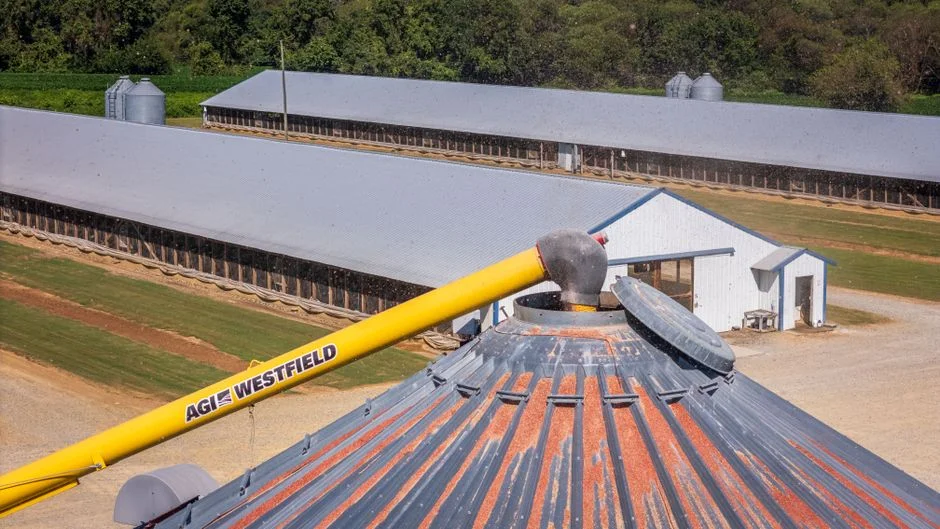
Time is money in any construction project. Here, steel has a clear advantage. The components of a steel silo—corrugated wall sheets, roof, support legs, and internal mechanisms—are manufactured in a factory. On-site work involves erecting a foundation and then bolting together the prefabricated parts. We have erected complete 3,000 MT steel silos in as little as 3 weeks under favorable conditions.
Concrete silo construction is a site-intensive process. After foundation work, the slip-forming or jump-forming process begins, followed by a mandatory curing period for the concrete to reach its design strength. This process cannot be significantly rushed without compromising structural integrity. Furthermore, concrete work is highly weather-dependent; cold or extreme heat can delay pouring and curing schedules.
When Should You Choose Each Silo Type?
Based on extensive field experience, here is a practical guide:
Opt for Steel Silos when:
- You need rapid deployment for temporary or seasonal storage.
- Your project budget is the primary constraint.
- The required capacity is below 10,000 MT.
- You need specialized features like multiple steep hoppers for difficult-flow materials.
- The site has limited access, as steel components are easier to transport.
Opt for Concrete Silos when:
- You are building a large, permanent facility (over 15,000 MT).
- Long-term durability and low maintenance are critical.
- The site is in a corrosive environment or requires high fire safety.
- Energy efficiency (insulation) and noise reduction are priorities.
- Aesthetics and integration with other concrete structures matter.
Frequently Asked Questions
What is the biggest difference in total cost of ownership between steel and concrete silos?
The total cost of ownership includes initial construction, maintenance, energy, and end-of-life costs. While concrete has a higher initial cost, its lower maintenance and longer lifespan often make it more economical over a 30-50 year period, especially for large capacities. Steel silos have lower upfront costs but require ongoing corrosion protection and have a shorter replacement cycle.
Can you mix steel and concrete in silo design?
Yes, hybrid designs are common. A very common configuration is a reinforced concrete foundation and lower cone (hopper) with a steel cylindrical shell and roof. This combines the structural strength of concrete at the high-stress discharge point with the faster construction of a steel upper section.
How does the climate affect the choice between steel and concrete?
In hot, arid climates, concrete's thermal mass helps stabilize stored material temperature. In cold climates, the insulation value of thick concrete walls prevents freezing at the walls. In coastal or high-humidity regions, the risk of steel corrosion is elevated, making concrete a more durable, though initially more expensive, choice.
Which silo type is better for storing specific materials like cement or fertilizer?
Both materials are abrasive and can be chemically aggressive. Concrete silos are generally preferred for large-scale cement storage due to their abrasion resistance and inertness. For fertilizers, especially those high in ammonium nitrate, steel silos often require specialized internal liners (like epoxy or stainless steel) to prevent corrosion, adding to the cost.
Are there environmental or recycling advantages to one material over the other?
Steel has a significant advantage in end-of-life. It is almost 100% recyclable without loss of quality, and recycled steel retains high value. Concrete structures are typically demolished, crushed, and downcycled into aggregate for roads or fill material, which has lower economic and energy value.
What is the typical foundation requirement for each type?
Both require a robust reinforced concrete foundation. The key difference is load distribution. A steel silo exerts high point loads from its legs or ring beam, requiring a carefully designed ring or pad foundation. A concrete silo, due to its massive self-weight, spreads its load more evenly over its entire base, often requiring a large, thick raft foundation.