
Key Takeaways
- Cement is a cohesionless but highly abrasive powder with a typical angle of repose between 35° and 45°, making it prone to ratholing if a funnel flow silo is used incorrectly.
- Mass flow silos, which guarantee first-in-first-out discharge, require a steeper hopper (typically 60°-75°) and a much lower wall friction angle than funnel flow designs.
- The critical decision point is the flow factor (ff): if ff < 1.3, you likely have a ratholing problem in a funnel flow silo; this single number can save you from a $150,000-a-year maintenance headache.
- Wall friction angle for cement on mild steel typically ranges from 25° to 30°, but this MUST be tested for your specific supplier's cement—variation is too high for guesswork.
- OSHA's General Duty Clause (Section 5(a)(1)) places the burden on you, the designer, to ensure the silo is free from recognized hazards, including structural failure from unpredictable material loads caused by ratholing.
- A basic flow test on 50kg of your actual cement costs under $2,000 and takes 48 hours; the alternative is a multi-month shutdown to excavate a bridged silo with jackhammers.
📋 Table of Contents
- The Night I Learned Cement Isn't Just Gray Powder
- Your Flow Properties Decision Framework: Mass Flow vs. Funnel Flow
- The Two Non-Negotiable Tests You Must Run Before Design
- Engineering the Numbers: A Hopper Angle Calculation Example
- Safety, Compliance, and the Cost of Skipping the Math
- Frequently Asked Questions
The Night I Learned Cement Isn't Just Gray Powder
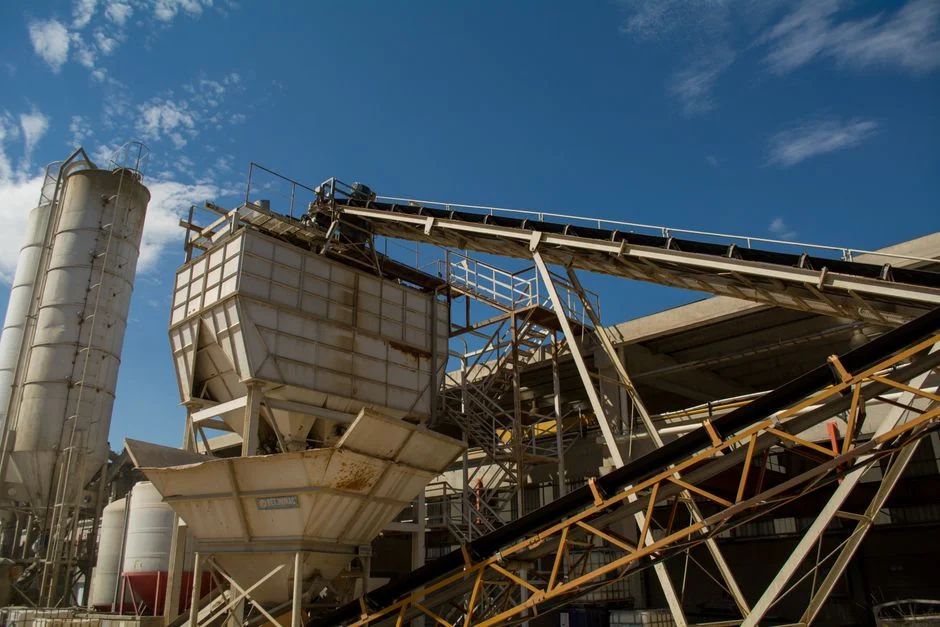
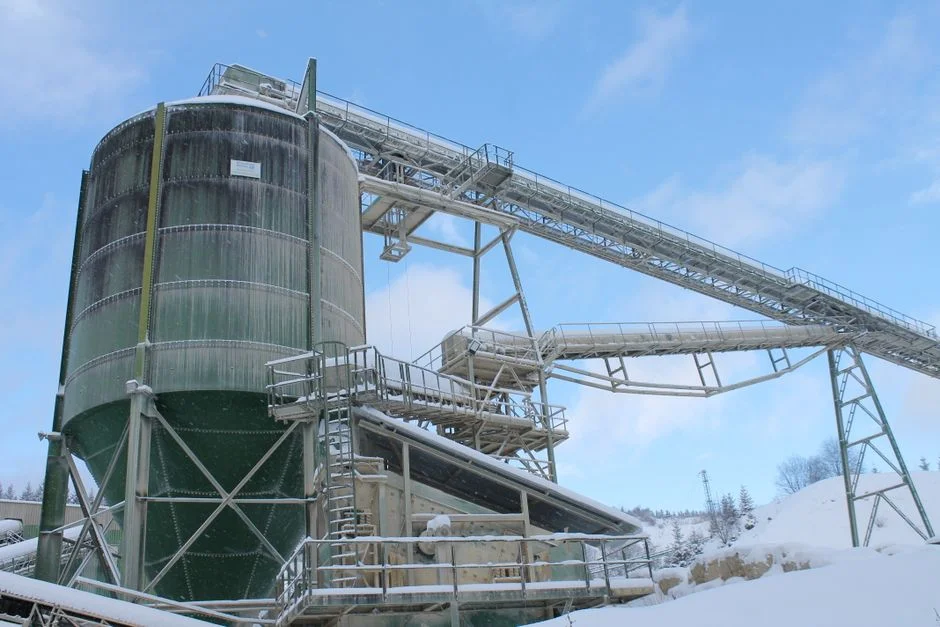
Look, early in my career, I thought cement was cement. Dry, gray, powdery. The silo was a silo. A cylinder with a cone on the bottom. We designed a 500-tonne cement silo for a concrete batch plant in Arizona. Used a standard 45° hopper angle. The vendor drawings looked fine. The structural calcs passed.
It failed spectacularly on its second fill.
The operator hit the discharge screw and got nothing. They hit the aeration pads. Nothing. Then they saw the silo wall bulging outward about a third of the way up. We had a perfect, stable rathole—a core of cement stuck to the walls like frozen concrete, with an empty void around the discharge point. The weight of the cement above was no longer flowing down; it was hanging on the walls, creating a massive hoop stress the silo was never designed for. We were 48 hours from a potential structural collapse. The shutdown, excavation, and retrofit cost more than the original silo.
The lesson? Cement isn't just a material. It's a dynamic, abrasive, and sometimes deceptive powder. Its flow properties dictate everything. And guessing is a gamble you will lose.
Your Flow Properties Decision Framework: Mass Flow vs. Funnel Flow
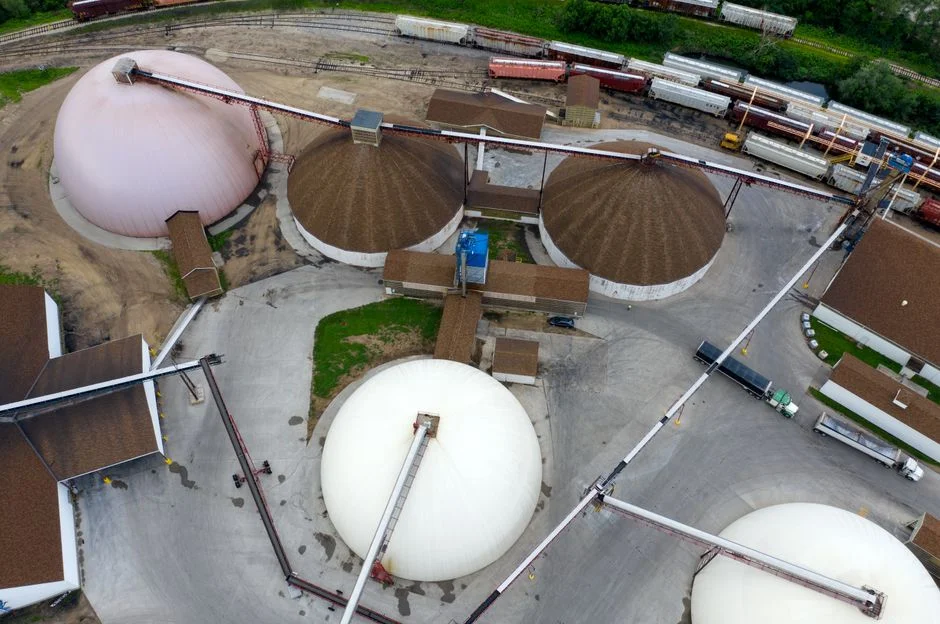
Here's the framework I use. It's simple. The question is always: What discharge pattern do I need for safe, efficient operation? Your answer dictates the design path.
| Decision Factor | Choose Mass Flow Silo | Choose Funnel Flow Silo |
|---|---|---|
| Primary Goal | Guaranteed first-in-first-out (FIFO) discharge. No ratholing. | Lower cost, shallower hopper. Acceptable for short-term storage where caking is not an issue. |
| Typical Hopper Angle (from vertical) | Steep: 60° to 75° | Shallow: 30° to 50° |
| Key Risk to Manage | Arching or bridging over the outlet. | Ratholing and eccentric discharge causing structural loads. |
| Best For Cement... When... | Long storage times, high-moisture climates, or when cement must not segregate. | Very high throughput, short storage (hours, not days), and you can live with last-in-first-out. |
| Compliance Note | Aligns with FIFO principles in ISO 22155 for bulk solids handling to prevent material degradation. | Requires rigorous analysis per ANSI/ASME B31.3 to ensure loads from asymmetric material columns don't exceed design stress. |
In my book, for any critical cement storage where downtime is expensive, mass flow is the default choice. The extra steel in the steeper hopper is cheap insurance against a rathole.
The Two Non-Negotiable Tests You Must Run Before Design
Stop. Before you draw a single line on a P&ID, you need two numbers from your specific cement. Not from a textbook. From the supplier delivering to your site.
Definition: Key Flow Properties
- Angle of Repose (φr): The angle of the cone formed when cement is poured freely. Tells you about the powder's internal friction. For cement, expect 35°-45°. Higher means more cohesive.
- Wall Friction Angle (φw): The angle at which cement begins to slide down a specific surface (e.g., mild steel). This is the #1 predictor of ratholing. For cement on steel, 25°-30° is common.
Here's how I explain the near-miss that changed my process. We were evaluating a new cement supplier for a project in Dubai. Their material was 5% cheaper. The sales specs looked great. But a basic flow test on their sample showed a wall friction angle of 32°—versus the 26° of our current supplier. On paper, a difference of 6 degrees. In reality, it was the difference between a flow factor (ff) of 1.4 (manageable) and 1.9 (certain ratholing). We walked away from the deal. Six months later, a competitor using that cement had to shut down their line for a week. The cost of that week dwarfed any per-ton savings.
Engineering the Numbers: A Hopper Angle Calculation Example
Let's run a simplified calculation. This isn't a full design—it's the check that tells you if your concept is in the right ballpark. We're designing a mass flow hopper for a cement silo.
Step 1: Gather Your Test Data
- Angle of Repose (φr): 40°
- Wall Friction Angle (φw) on mild steel: 28°
- Hopper half-angle (θ): Let's assume 15° (for a 30° total cone angle).
Step 2: Determine the Flow Function (ff)
We need Jenike's critical flow function. For cement, which is cohesionless, we often use the simplified form:ff = [ (1 + sin φr) / (1 - sin φr) ] * [ sin(φw) / (1 + sin(φw) * cos(φw) ) ]
Plugging in our numbers:ff ≈ [ (1 + 0.643) / (1 - 0.643) ] * [ 0.469 / (1 + 0.469 * 0.883) ]ff ≈ [ 1.643 / 0.357 ] * [ 0.469 / 1.414 ]ff ≈ 4.60 * 0.332 ≈ 1.53
Step 3: Interpret the Result
A flow factor of 1.53 is borderline. It suggests that for this cement, with a 30° hopper, arching is a risk. To ensure mass flow, you need a steeper hopper angle. The rule of thumb: your hopper half-angle (θ) must be less than 90° - φw. Here, that's 90° - 28° = 62° from vertical. A 15° half-angle is fine. But this calculation flagged that the material's friction is pushing us toward the limits. The takeaway? Verify with a full Jenike shear test.
This is the math that prevents the multi-ton jackhammer projects. Spend the $2,000 on the test, not the $200,000 on the fix.
Safety, Compliance, and the Cost of Skipping the Math
This isn't just about operational headaches. This is about life safety. OSHA doesn't care if your flow function was borderline. They care if a worker enters a silo to break a bridge and the remaining material shifts and buries them. Confined space entry for silo excavation is one of the most dangerous jobs in our industry.
I reference ISO 21873-1 (Building construction machinery – Safety) and the principles in ACI 313 (Recommended Practice for Design and Construction of Concrete Silos) for structural integrity. But the real compliance driver is the OSHA General Duty Clause. It puts the onus on you to identify and mitigate hazards. A rathole is a recognized, severe hazard that causes:
- Structural Overload: Eccentric loading can exceed design hoop stress by 200-300%.
- Unpredictable Discharge: Sudden slumping can cause equipment damage or injury.
- Costly Remediation: Lockout/tagout, confined space permits, nitrogen inerting for explosive dust environments—all because you skipped a flow test.
Do the work upfront. Test the cement. Do the math. Design the silo. It's not bureaucracy; it's engineering.
Frequently Asked Questions
Q: Can I just use a vibratory bin activator on the hopper to fix a ratholing problem in my existing cement silo?
A: You can, and it often works temporarily. But understand what you're doing. Vibration can fluidize cement, which might collapse a rathole but can also cause sudden, dangerous slumping and overloading your feeder. It can also compact the material further at the walls, worsening the problem long-term. Per ASME B20.1, you must then re-evaluate all structural and equipment loads. It's a band-aid, not a cure. The permanent fix is almost always redesigning the hopper or the discharge point.
Q: What's the biggest mistake you see engineers make when specifying cement silos?
A: Assuming all cement is the same. I see specs that say "cement" and use generic angles from a textbook. Cement from a vertical roller mill (VRM) can have very different flow properties than from a ball mill. Specific surface area (Blaine fineness) and moisture content are huge variables. Another top mistake is underestimating the need for aeration or air injection. For mass flow of fine cement, proper aeration is not optional; it's critical to lower the effective friction and ensure consistent flow.
Q: How do weather and climate affect my cement silo design?
A: Dramatically. In hot, humid climates like Southeast Asia or the US Gulf Coast, cement can pick up moisture even in a covered silo. Moisture increases cohesion and the wall friction angle, making ratholing far more likely. This pushes you more strongly toward a mass flow design with very steep hoppers and reliable aeration. For arid climates, the risk is less, but you must still guard against rainwater ingress during loading. ISO 11697 covers principles for storing bulk materials and highlights moisture as a primary flow derating factor.
Q: Is a mass flow silo always more expensive?
A: The initial capital cost is higher, yes, by 15-25% typically, due to the steeper hopper cone and often a larger diameter to achieve the same capacity with the taller cone. However, the total cost of ownership is almost always lower. You eliminate downtime for rathole remediation, reduce structural repair costs, and ensure consistent, reliable feed to your process. I've run the numbers on three plants, and the payback period for the extra steel is always under two years.
Q: What standards should I absolutely reference in my silo design specification?
A: Start with ACI 313 for concrete silos or EN 1993-4-2 (Eurocode 3, Part 4-2) for steel silos for structural design. For the flow and mechanical aspects, reference ISO 22155 (Equipment for storage and transport of bulk materials). And for the overall safety framework, your design must comply with OSHA 29 CFR 1910 (General Industry Standards), specifically the sections on walking-working surfaces and permit-required confined spaces.
Q: Can we use a mass flow design to prevent cement from "caking" or "setting" in the silo?
A: Mass flow ensures FIFO, which is your best defense against caking. If old cement sits for weeks or months (in funnel flow), it has time to absorb ambient moisture and begin hydration, forming a hard cake. Mass flow gets the oldest cement out first. However, if your cement has unusually high moisture content from the plant, no flow design will prevent setting if storage times are too long. The solution there is a combination of proper silo design, excellent sealing, and possibly a fluidizing system to keep the material agitated.