
Key Takeaways
- IoT monitoring systems can achieve inventory measurement accuracy of ±0.1% of volume, or better, eliminating manual measurement errors and shrinkage.
- Automated aeration control based on real-time temperature and moisture data can prevent spoilage in 95% of cases for agricultural products like grain.
- Continuous vibration monitoring with IoT sensors is essential for detecting early signs of structural fatigue, a key failure mode in steel silos.
- The global market for industrial silo monitoring solutions is projected to grow at over 8% CAGR, driven by demand for predictive maintenance and operational safety.
- Integration of level sensors with automated dispatch systems can reduce silo turnaround time by up to 40% in grain terminals and cement plants.
- Early warning systems for abnormal pressure or temperature can prevent dust explosions, which account for a significant risk in combustible bulk storage.
In our 15 years of engineering storage solutions across 30 countries, we've seen a fundamental shift. The modern bulk silo is no longer just a passive steel vessel; it's an intelligent node in a connected industrial ecosystem. The integration of Automated Storage Management and IoT (Internet of Things) Monitoring Systems represents this evolution, turning silos from potential liability points into assets of continuous data and control. This article details the technical foundation, design considerations, and proven implementation strategies from our field experience.
Technical Foundation: The Core Components of a Smart Silo System
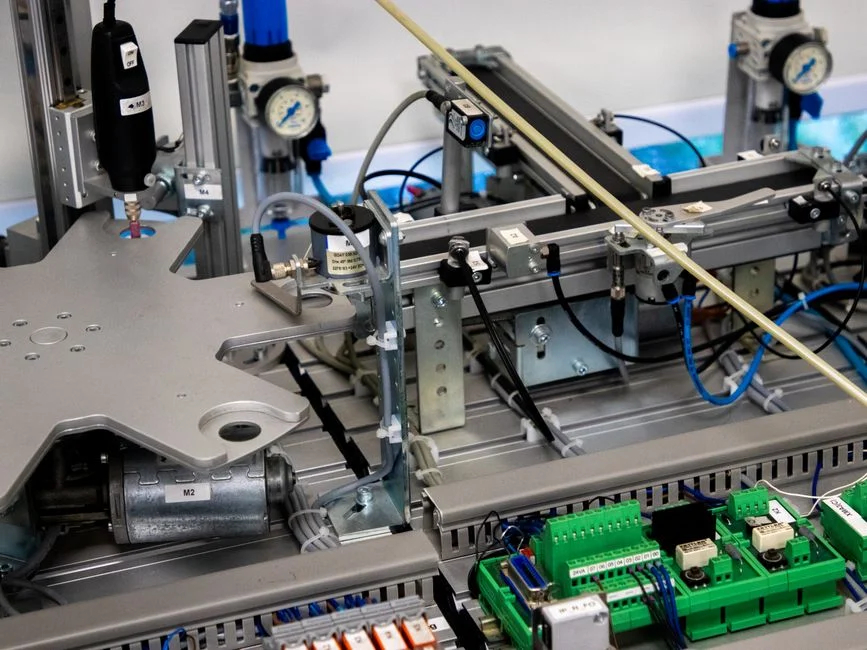

At its heart, an automated silo management system operates on the classic automation loop: Sense → Decide → Act. Each component is engineered for the harsh, often hazardous, environment inside and around a silo.
Definition: Industrial IoT (IIoT) in Bulk Storage
The Industrial Internet of Things (IIoT) refers to the network of physical sensors, controllers, and software integrated within industrial equipment—in this case, silos—to collect, exchange, and analyze data for operational improvement. Unlike consumer IoT, IIoT prioritizes reliability, security, and real-time operation in challenging environments.
The essential hardware layers include:
- Sensing Layer: A suite of rugged sensors is the system's nervous system. This includes level sensors (radar, laser, or guided wave radar for ±0.1% accuracy), temperature sensors (distributed across product mass and structure), pressure transducers, vibration sensors on structural supports, and moisture content analyzers. For explosive environments like grain or flour silos, all sensors must be ATEX or IECEx certified.
- Control & Communication Layer: Data from sensors is routed to a local PLC (Programmable Logic Controller) or edge computing gateway. This layer uses industrial protocols like Modbus TCP, PROFINET, or OPC UA for robust communication. Data is transmitted to a central server or cloud platform via secure cellular (4G/5G), fiber, or industrial Wi-Fi.
- Actuation Layer: Based on logic from the control system, this layer triggers automated actions. Examples include starting aeration fans when temperature thresholds are breached, opening/closing dome valves for filling/emptying, or sounding alarms and shutting down equipment during a critical event.
Design Considerations: Engineering for Reliability and Safety

Implementing IoT in silos is not about off-the-shelf consumer gadgets. Our design philosophy is rooted in robustness and fail-safety. On a recent cement plant project in Southeast Asia, we specified a system architecture that could withstand ambient temperatures of 45°C and 95% humidity. Key engineering decisions include:
- Sensor Placement and Redundancy: Critical measurements like product level and temperature require redundancy. We typically install dual radar level sensors in primary and backup configurations. Temperature probes are placed in a vertical array, often 4-6 levels, to create a thermal map of the stored product. This map is vital for detecting hotspots indicative of spoilage or spontaneous combustion.
- Hazardous Area Classification: Silo headspaces often contain combustible dust. The entire IoT system must be designed in compliance with standards like the NEC (NFPA 70) in North America or the ATEX Directives (2014/34/EU) in Europe. This dictates the use of intrinsically safe or explosion-proof enclosures for all electrical components.
- Structural Health Monitoring (SHM): A key insight from our work is that IoT must monitor the silo itself, not just the product. Strain gauges on stiffening rings and vibration sensors on support columns provide early warnings of structural stress. This data, analyzed against finite element models (FEM), can predict maintenance needs years in advance, preventing catastrophic buckling failures.
- Data Integration with Plant Systems: The silo management system cannot be an island. It must integrate via secure APIs with the plant's overall DCS (Distributed Control System), ERP (Enterprise Resource Planning) software, and logistics management systems. This enables a full digital thread, from raw material receiving to product dispatch.
Implementation Process: From Sensor to Insight
A successful deployment follows a phased engineering approach. Skipping phases is a common cause of costly failures.
- Survey & Audit: We begin with a physical and operational audit. This involves 3D scanning for sensor placement mapping, reviewing existing electrical infrastructure, and documenting all manual processes and pain points with plant operators.
- System Design & Simulation: Engineers create a detailed system architecture and often use digital twin simulation software to model data flows and test control logic under various scenarios (e.g., rapid filling, power outage) before any hardware is installed.
- Installation & Commissioning: Installation is done in coordination with planned shutdowns. Each sensor is calibrated individually, and the network communication is stress-tested. A crucial step is the 'dry run' commissioning, where the system is tested with empty silos to verify all control actions.
- Software Configuration & Integration: The supervisory control software (SCADA/MES layer) is configured with user dashboards, alarm hierarchies (from minor advisory to critical shutdown), and reporting templates. Integration with plant software is thoroughly tested.
- Training & Handover: We train both maintenance and operations staff. Our field experience shows that user adoption is the single biggest factor in long-term success. Comprehensive manuals and a remote support portal are provided.
Best Practices for Optimizing Automated Silo Systems
Based on hundreds of commissioned projects, these practices yield the best ROI and reliability:
- Prioritize Predictive Maintenance: Use vibration and temperature trend data to schedule maintenance based on actual asset condition, not arbitrary calendar dates. This approach has reduced unplanned downtime by 30% in our client plants.
- Implement a Layered Security Model: Industrial control systems are cyber-physical systems. A best practice is a defense-in-depth strategy: DMZ (Demilitarized Zone) for data, regular penetration testing, and strict access control policies for remote access.
- Leverage Data for Process Optimization: Go beyond monitoring. Use historical data on filling rates, product flow, and aeration cycles to continuously refine silo operation parameters. For example, optimizing the fill-stop cycle can reduce product segregation and dust generation by 15%.
- Plan for Cybersecurity from Day One: The convergence of IT (Information Technology) and OT (Operational Technology) requires security by design. Encrypt data in transit and at rest, use industrial-grade firewalls, and segment the control network from the corporate network.
Frequently Asked Questions
Q: How much does it typically cost to retrofit IoT monitoring onto an existing bulk silo?
A: The cost varies significantly based on the number of silos, sensor complexity, and integration requirements. For a single, medium-sized agricultural silo, a basic monitoring retrofit (level, temperature, basic aeration control) can range from $15,000 to $30,000 USD. For a large cement or chemical storage silo with advanced structural health monitoring and full DCS integration, the cost can exceed $80,000 USD. The ROI is typically realized within 18-24 months through reduced product loss, lower maintenance costs, and improved operational efficiency.
Q: What is the difference between automated and IoT-based silo management?
A: Automated silo management often refers to local, pre-programmed control sequences, like a timer turning on an aeration fan. IoT-based management is a superset; it adds continuous sensing, cloud connectivity, data analytics, and remote supervisory control. It enables predictive analytics and optimization that standalone automation cannot achieve. Essentially, IoT provides the 'eyes and ears' and the long-term memory for the automated 'hands' of the silo system.
Q: How reliable are these systems in extreme weather conditions like very hot or cold climates?
A: Reliability is a function of proper engineering. We specify sensors and electronics rated for the specific environment—for example, components rated for -40°C to +85°C for cold storage or tropical silos. The design must include considerations for condensation, thermal expansion, and UV resistance. With correct specification and installation, these systems demonstrate over 99.5% uptime in demanding environments, from Siberian winters to Middle Eastern deserts.
Q: Can these systems integrate with our existing enterprise resource planning (ERP) software?
A: Yes, modern IoT platforms are designed for integration. They offer APIs (Application Programming Interfaces) or standard connectors (like OPC UA) to feed real-time inventory, weight, and status data directly into ERP systems like SAP, Oracle, or Microsoft Dynamics. This eliminates manual data entry, improves inventory accuracy to over 99%, and enables just-in-time logistics planning.
Q: What is the biggest safety advantage of implementing IoT monitoring on silos?
A: The most critical safety advantage is the early detection of conditions that lead to catastrophic events. This includes monitoring for abnormal pressure rise (indicating a blocked filter), dangerous temperature gradients (a precursor to spontaneous combustion in coal or biomass), and abnormal vibration (signaling structural fatigue). The system can trigger automatic shutdowns and emergency ventilation, providing a vital safety buffer that manual checks cannot match.
Q: How much ongoing maintenance does a silo IoT system require?
A: While far less labor-intensive than manual monitoring, the system itself requires scheduled maintenance. This includes annual calibration checks for critical sensors like level and weight devices, software updates and cybersecurity patches, and periodic inspection of wiring and junction boxes. We recommend a light-touch quarterly visual inspection and a comprehensive annual system health check, which our remote monitoring service can help facilitate.